
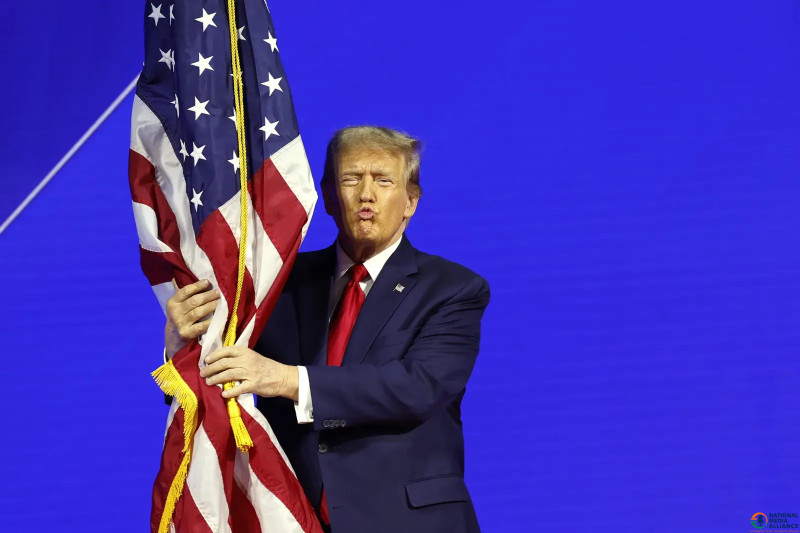
Among the many lessons driven home by Donald Trump's triumphant comeback is a sense, particularly among young voters, that they don't have to feel ashamed about being patriotic.
"I've felt like I've had to keep my feelings about loving America to myself," a 30-year-old male independent voter from New York told Newsweek. "If you open your mouth and say, 'I love America,' people automatically think you're saying, 'I love Donald Trump.' I don't want people to think I'm a raging MAGA person just because I support the country that I grew up in."
Patriotism has become a fault line in Trump's America, though it didn't start with Trump. The divisions over what it means to love the U.S. solidified in the Bush years. After 9/11, Americans were told that being openly patriotic was part of their national duty — that flying the stars and stripes from their porch or slapping a magnetic ribbon on their car was a small way to defeat the terrorists.
But after the wars in Iraq and Afghanistan devolved into quagmires, and amid an increasingly draconian security state and cascading failures at home — from Hurricane Katrina to the housing bubble — something shifted. It was no longer cool to be patriotic. It was cool to march, to protest, to "resist." The resistance, as it were, came into its own after the Trump was first elected in 2016, further polarizing the country between those who supported the administration and those who did not.
Users on TikTok have shared videos about not wanting to be mistaken as a conservative for wearing sweaters with the American flag, and there are multiple Reddit threads asking, "Is it weird for me to say that I still love America?"
In one thread asking if liberal homeowners fly the flag outside their houses, a Reddit user said, "I've always believed that the flag should represent all Americans, and that we all have the right to display it. Yet, I can't shake off my discomfort with certain versions of the flag—specifically the ones that are often seen on Blue Lives Matter paraphernalia and in conservative militia gear."
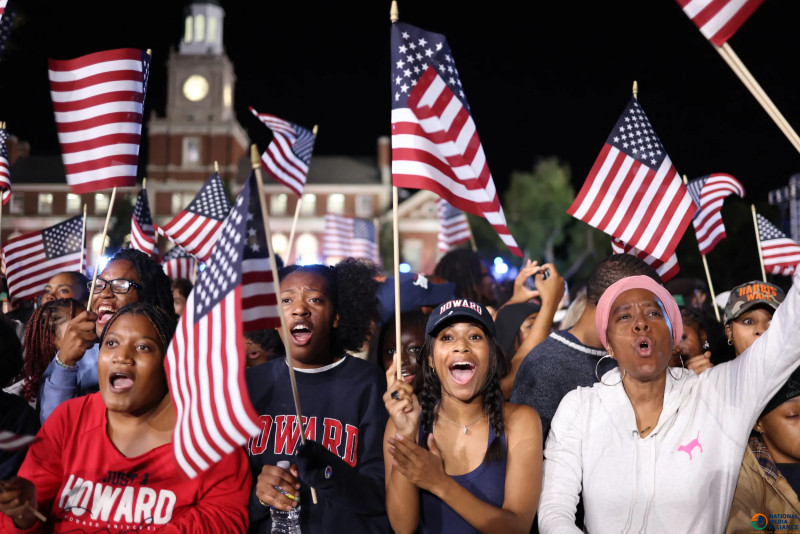
The comeback of Donald Trump has changed things yet again. His inroads with core Democratic constituencies, from Latino and Black voters to young people — groups that happen to be cultural arbiters — shows signs of the country returning to a place where it's not just OK to be openly patriotic, it's cool again.
"You don't get to say all Trump supporters are racist when my entire black family and friends voted for him," Amir Odom, a conservative influencer who is Black and gay, told Newsweek. "You don't get to say all Trump supporters are homophobic when my gay friends got married at Mar-A-Lago earlier this year. It's all nonsense."
This year, the president-elect has shattered the image of a stereotypical Trump supporter, and in doing so, has expanded the portrait of a "patriot." Being a proud American has moved back to being a cultural signifier.
"It's a different environment from 2016 and 2020," Odom said. "More people are on board, and you look silly if you aren't patriotic about your country. The same people touting a Ukraine flag in their bio won't tout an American flag? Now they look like the crazy ones."
A 25-year-old male voter from New Jersey who described himself as "absolutely proud to be an American" told Newsweek: "When people say, 'Oh you love being American, you must love everything about it.' Well no, because you love something you want to invest in it, you want to make it greater, you want to improve everything that is the country."
"But there's a lot of people who are so quick to say, 'f--- America, I'm going to leave. I want to get away.' It's very dismissive, the same way how some people are like, 'Oh, you voted for this person? I'm not talking to you. I'm going to unfollow you.'"
"It's a sad phenomenon," conservative political commentator Tomi Lahren said of the political assumptions that people make around displays of the American flag.
"As a Republican, I love being the party of patriotism, but I don't know when we as a nation took such a departure from everybody loving our country and everybody being proud patriots, regardless of if they're a Democrat or Republican," Lahren, who is also the host of Tomi Lahren is Fearless on OutKick.com, told Newsweek.
The 25-year-old New Jersey resident who was granted anonymity to discuss his personal politics said while he has never voted for Trump, nor has anyone in his family, "the people who I know who are more pro-Trump are more open to having conversation than people who are on the far-left, who were completely dismissive and not willing to have any conversation."
Dan McAdams, the Northwestern University psychologist known for his theories on how personal narratives shape one's sense of self, told Newsweek that much of the support Trump has garnered between 2020 and 2024 stems from the resentment that has been brewing across the country.
"[Americans] find the whole business about political correctness and the perceived condemnation of elites to be infuriating," McAdams said. "They feel anger and resentment that they are looked down upon and judged negatively by people and institutions that have more cultural cache than they have."
The strategies employed by Kamala Harris during the campaign suggest that the Democratic party understands the American public has moved away from the virtue signaling associated with the left, whether that's because it's no longer trendy or that people feel resentful over it. For the first time in decades, Democrats challenged Republicans on their claim to being the "live and let live" party this year when the Harris-Walz campaign positioned themselves as champions of small government and personal freedom.
Comments (0)
Login or Register to leave a comment.